
Opening Plenary Session
Siegfried Voigt, Deutsche Raumfahrtagentur, Abteilung Satellitenkommunikation

Heinrich Hertz Mission – The German communication space lab
On July 5th 2023 the Heinrich Hertz Satellite (H2Sat) was launched aboard the last ARIANE 5 rocket and placed into geostationary orbit. After the commissioning of the platform and payload the satellite is ready for communication experiments. The Heinrich Hertz Satellite is Germany’s first dedicated communications satellite, designed to test and validate new satellite communication technologies in space. It enables German universities, research institutes as well as industrial companies to conduct a wide range of experiments, giving scientists and engineers a head start in the development of new communication technologies and services. Beyond that, H2Sat will contribute to the further development of space technologies for the next generation of communications satellites. This presentation provides an overview of the technology verification payload, as well as several leading and successful experiments worldwide, with a particular focus on experiments using the Fraunhofer On-Board Processor (FOBP).
Ralf Riedinger, University of Hamburg, Institute for Quantum Physics
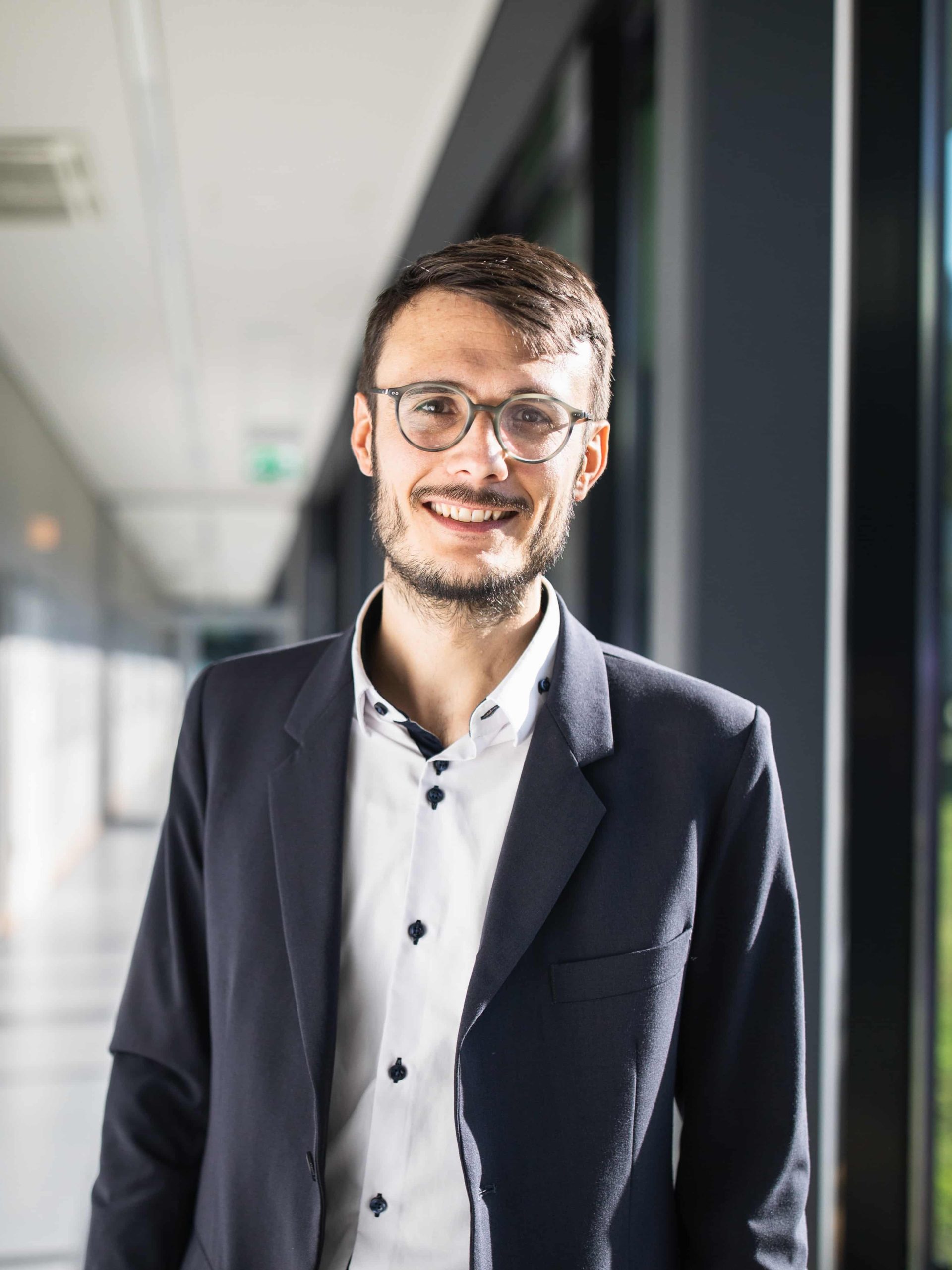
The microwave backbone of quantum technology – building the future on the shoulders of giants
I take you on a journey into the fascinating world of quantum systems and highlight how microwave technology is shaping their development. We explore how microwaves are used to construct artificial atoms and control real ones, and discuss how improved microwave technology can aid in building fault-tolerant quantum computers.
Closing Plenary Session
Vasily Artemov, Hamburg University of Technology

The electrodynamics of water in single-digit nanopores
I will discuss recent experimental results on measuring the dielectric function and electrical conductivity of water confined in channels down to 1 nm. I will provide theoretical background and measurement results demonstrating high dielectric anisotropy and enhanced proton conductivity of water at the nanoscale. Particularly, some previously overlooked effects associated with charge transfer and charge separation will be demonstrated. The application of these effects in energy storage and their relevance to biological systems signalling will be discussed.